



Shiba Fantom – Overview
Shiba Fantom is a decentralized token built on the Fantom blockchain designed to empower the Shiba Inu community by enabling fast, scalable, and affordable DeFi participation, while also offering a clear pathway for developers and liquidity providers to experiment with new decentralized applications. The token provides governance power, staking opportunities, and liquidity incentives within a growing ecosystem of DeFi projects on Fantom, leveraging Fantom’s high-throughput consensus to reduce friction for users who want to swap, yield, and build without compromising security or user experience. The initiative emphasizes transparent tokenomics, continuous development, and community-driven decision making, with regular audits, open-source smart contracts, and publicly documented milestones to ensure accountability and reduce risk for early adopters and long-term holders alike. In practice, Shiba Fantom seeks to bridge the Shiba Inu community with the broader crypto landscape by enabling cross-chain interactions, NFT initiatives, and collaborations that showcase how decentralized finance tokens can support real-world utility rather than speculative trading alone. As the ecosystem matures, the project aims to align incentives across liquidity providers, developers, validators, and stakeholders, so token utility expands from simple transfers to multi-faceted use cases such as governance participation, staking yields, and governance-driven upgrades that shape the trajectory of DeFi on the Fantom network.
What is Shiba Fantom?
Shiba Fantom is a decentralized token anchored to the Fantom blockchain, developed to extend the reach of the Shiba Inu community into a scalable DeFi environment. The token acts as a governance and utility instrument within a growing ecosystem of dApps, liquidity pools, and staking opportunities, enabling holders to participate in decision-making while enjoying practical use cases. Built on Fantom’s high-speed, low-cost network, the Shiba Fantom token leverages a robust smart contract platform that supports automated market making, yield farming, and cross-chain collaboration. The design emphasizes security, transparency, and a clear set of tokenomics that guide distribution, inflation, and incentives for early adopters, developers, and liquidity providers. In practice, this combination creates a feedback loop where community participation drives development, which in turn creates more real-world utility for the token and its holders. The token also serves as a bridge between the Shiba Inu community’s brand and the broader DeFi landscape on Fantom, rewarding staking, providing liquidity incentives, and enabling seamless token swaps to attract new users while rewarding loyal holders. Fantom’s Lachesis-based architecture provides fast finality and predictable gas costs, which support frequent trades, yield farming, and lending protocols without sacrificing security. With governance baked into its core, Shiba Fantom invites holders to propose and vote on protocol upgrades, parameter changes, and new partnerships, ensuring that development priorities reflect the interests of a diverse community. Ultimately, the project aims to translate community enthusiasm into tangible financial and technical outcomes, turning token ownership into active participation and shared ownership over the project’s direction.
Project history and development timeline
Development milestones have guided Shiba Fantom from concept to a functioning platform that users can interact with today. The table below captures key events in a format that is easy to scan and compare as the project grows.
Core team and governance
A strong team and governance framework underpin long-term trust and participation. The core team comprises seasoned developers, security researchers, and community managers who coordinate with external advisors to guide technical decisions and risk management. Advisors bring experience in security, DeFi, and tokenomics to support audits, scalable design choices, and sustainable incentive models. The governance model emphasizes token-weighted voting, transparent decision logs, and regular governance calls that invite proposals from holders and developers. A security and compliance lead oversees code reviews, audits, and adherence to industry standards to minimize risk for users. A community contributors program rewards volunteers for documentation, localization, bug reporting, and educational content, strengthening participation across regions. Together, these elements create a foundation for open collaboration and responsible decision making that can adapt as the ecosystem evolves.
How Shiba Fantom fits into the crypto ecosystem
Shiba Fantom sits at an intersection of the Fantom blockchain, DeFi projects, and social communities centered on the Shiba Inu brand. By anchoring the token on Fantom, the project benefits from fast finality, low fees, and robust smart contract tooling, which enables a wide range of decentralized applications—from liquidity pools and lending protocols to yield aggregator systems and cross-chain bridges. The governance model uses token-weighted voting and transparent proposals, enabling holders to influence upgrades and parameters while cross-chain bridges and token swaps expand access to users across Ethereum, Fantom, and other ecosystems. NFT integrations with Shiba Fantom offer new avenues for collectibles and digital art, potentially increasing on-chain activity and user engagement. Staking and yield farming strategies provide ongoing rewards for long-term participants, reinforcing token utility and long-term commitment. In the broader market, Shiba Fantom aims to complement existing DeFi projects on Fantom, encouraging interoperability and collaborative innovation rather than isolated ecosystems. The project also emphasizes token audit and compliance standards to align incentives with security best practices, governance transparency, and sustainable growth. Ultimately, Shiba Fantom envisions a more connected crypto landscape where community-driven development, responsible tokenomics, and open-source governance accelerate the maturation of decentralized exchanges and DeFi services across multiple blockchains.

Purpose and Value Proposition
Shiba Fantom is positioned to bridge community energy with practical DeFi utility on the Fantom blockchain. It seeks to create a token with clear purpose that users can trust to power everyday activity in a fast, low-cost network. The project emphasizes on-chain governance, real-world use cases, and developer-friendly tooling to invite widespread participation. By focusing on utility, liquidity, and community-driven evolution, Shiba Fantom aims to stand out in a crowded landscape while maintaining a friendly user experience.
Token purpose and intended use cases
Shiba Fantom is designed to provide practical utility within the Fantom ecosystem and beyond, aligning incentives for developers, liquidity providers, merchants, and everyday users. The core idea is to move beyond hype and establish a token with measurable functions that support a range of on-chain activities and governance decisions.
Payments and microtransactions form the initial backbone: the token is intended to enable fast, low-cost transfers across dApps, wallets, and merchant integrations built on Fantom, reducing friction for small-value payments and tipping in decentralized marketplaces. This objective hinges on Fantom’s high throughput and near-instant finality, which allow transactions to settle with minimal latency even during peak network activity. In practice, this means dApps can offer near-instant settlement for in-app purchases, gaming economies, and pay-per-use services without requiring expensive gas fees.
Governance is a key pillar: holders can participate in on-chain voting to influence protocol upgrades, parameter adjustments, treasury allocations, and feature rollouts. By distributing governance rights proportionally to active participants, the project aims to create a more responsive development cycle where community feedback translates into measurable changes. This approach helps prevent centralization and ensures that improvements reflect the needs of a broad user base rather than a small group of insiders.
Staking, liquidity provision, and yield opportunities are designed to reward long-term stewardship: users can stake tokens to secure networks, participate in liquidity pools, and earn rewards tied to platform activity. This ecosystem-driven model sustains liquidity, encourages risk-sharing among participants, and aligns financial incentives with network health. The design also emphasizes safety measures, such as liquidity locking, transparent reward schedules, and periodic audits of smart contracts and governance processes to minimize unexpected vulnerabilities.
Beyond core DeFi use cases, the token is positioned to support broader ecosystem growth through interoperable smart contracts, cross-chain bridges, and potential NFT integrations that expand utility into collectibles, digital assets, and exclusive experiences. The combination of payments, governance, staking, and cross-chain capabilities creates a versatile toolkit that can adapt as the Fantom ecosystem evolves, while providing clear signals for developers and users about where value is created and distributed.
Value proposition for users and investors
For users, the appeal lies in practical on-chain utility, predictable rewards, and a governance process that invites direct influence over how the token participates in the ecosystem, while also emphasizing security, openness, and accessibility for newcomers. For investors, the attractiveness centers on growth potential, liquidity depth, and the opportunity to participate in community-driven development that aligns incentives across developers, users, and liquidity providers, creating a more resilient and transparent token economy.
For users and investors alike, the token’s value proposition is reinforced by a transparent distribution model, clear tokenomics, and a roadmap that emphasizes ecosystem-building activities such as developer grants, liquidity incentives, and partnerships with DeFi protocols that are already popular on Fantom. The ongoing emphasis on security, independent audits, and governance-led decision-making aims to reduce exploit risk while increasing confidence in long-term participation.
- Payments and value transfer: Shiba Fantom is designed to enable fast, low-cost on-chain payments within Fantom-based apps and partner platforms, supporting microtransactions and everyday consumer use.
- Governance participation: Token holders can influence protocol upgrades, treasury decisions, and feature rollouts through on-chain votes, aligning development priorities with the community’s preferences and risk tolerance.
- Staking rewards and liquidity mining: The token offers opportunities to earn yield by staking or providing liquidity in pools, distributing incentives tied to network activity and platform growth.
- Interoperability and cross-chain utilities: Shiba Fantom aims to bridge to other ecosystems, enabling cross-chain swaps and compatibility with diverse DeFi protocols to broaden use cases.
- Security and compliance incentives: Participation in audits and adherence to best practices can bolster trust, encouraging the adoption of Shiba Fantom in more formal DeFi deployments.
- NFT and ecosystem integration: The token supports NFT partnerships and artist collaborations within the Fantom network, expanding the token’s utility into digital assets, experiences, and creator monetization.
As a result, participants can expect a structured path to involvement with tangible returns through staking, governance influence, and expanding use cases as dApps adopt the token.
Comparison with similar tokens
To better understand Shiba Fantom’s position, a concise comparison with two well-known peers helps highlight differences in network, supply dynamics, use cases, and risk considerations.
| Token | Network | Total Supply | Circulating Supply | Primary Use Case | Governance | Staking/Yield | Notable Risks |
|---|---|---|---|---|---|---|---|
| Shiba Fantom | Fantom | Dynamic, governance-influenced | Variable, largely in circulation | Payments, DeFi participation, governance | On-chain voting by holders | Staking and liquidity mining | Smart contract risk; governance risk; liquidity fragmentation |
| Shiba Inu | Ethereum | 589,735,030,408,323 SHIB | Most of supply in circulation | Payments and ecosystem tokens on ETH; brand-driven uptake | Community-led governance with off-chain proposals | Limited direct on-chain staking options; ancillary yield via platforms | High supply, meme-driven volatility, and liquidity risk |
| Fantom (FTM) | Fantom | 3,175,000,000 FTM | Approximately 2.8B FTM in circulation | DeFi, payments, and network security | On-chain governance by FTM holders | Staking rewards via network | Centralization risk; network reliance; price volatility |
The table underscores how Shiba Fantom sets itself apart by combining practical DeFi utility on Fantom with community governance, whereas peers emphasize different balance points between supply dynamics, governance structure, and ecosystem breadth.
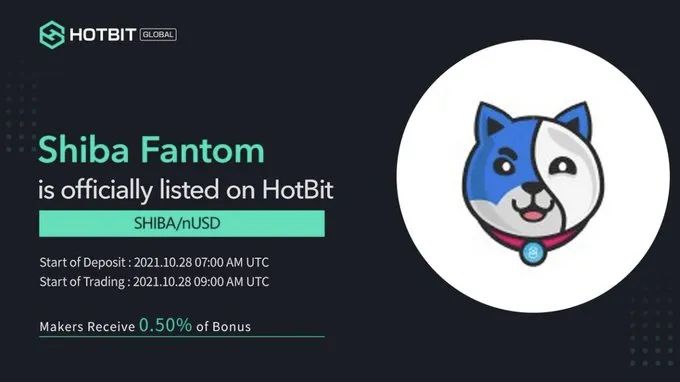
Key Features, Benefits, and Differentiators
Shiba Fantom is designed to blend the Shiba Inu community ethos with Fantom’s high-performance blockchain, delivering a scalable, secure, and interoperable token for decentralized finance. This H2 section highlights core features, benefits, and differentiators that shape how developers, traders, and enthusiasts interact with the project. Built to leverage Fantom’s Lachesis consensus and EVM compatibility, Shiba Fantom emphasizes fast finality, low fees, and a developer-friendly environment for smart contracts and DeFi apps. The token’s design prioritizes utility, governance, and incentives that align community participation with long-term sustainability. By combining a vibrant community with robust technical foundations, Shiba Fantom aims to stand out in a crowded DeFi landscape while remaining accessible to beginners.
Technical features and protocol
Shiba Fantom is architected to run on Fantom’s Opera network, leveraging Lachesis, the network’s asynchronous BFT consensus, to achieve sub-second finality and high throughput during periods of high activity. By design, the project adheres to an EVM-compatible environment, enabling developers who are familiar with Ethereum tooling to deploy contracts, test them in standard environments, and port existing DeFi logic with minimal modification. This compatibility reduces onboarding friction for teams migrating from Ethereum or Polygon and encourages broader participation from auditors, auditors, and security researchers who already understand the common patterns of DeFi contract design. The token layer is intentionally modular, allowing wrappers, proxy patterns, and upgrade-friendly contracts to coexist with stable integrations, enabling gradual feature rollouts and community-driven experimentation without destabilizing the core settlement engine. Moreover, the architecture supports isolated testing environments and simulated mainnet deployments, giving teams a safer sandbox to mature risky strategies before live release. The emphasis on compatibility also reduces dependency on custom tooling, enabling faster iteration cycles and a broader ecosystem of libraries.
Smart contracts within Shiba Fantom are designed around security-first principles and gas-efficient execution. The codebase emphasizes modular contracts, formal testing, and reusable patterns that reduce duplication and exposure. Developers can use familiar Solidity patterns and Remix-style workflows, benefiting from established auditing practices and community-driven templates. Interoperability is achieved through standardized interfaces and adapters that enable cross-chain data and asset sharing with other ecosystems while preserving custody under user keys. Bridges and wrapped representations on Fantom facilitate asset swaps, collateral reuse, and liquidity porting across DeFi primitives, with consistent event logs and upgrade paths to minimize slippage during migrations. Auditing and formal verification are integral parts of the deployment lifecycle, with open-source test vectors and community review encouraging rapid detection of edge cases and potential exploits before mainnet use. This approach not only strengthens security but also enhances trust among users and institutional participants exploring on-chain governance and asset custody across bridges.
Security is foundational, with a multi-layer approach that includes design reviews, static analysis, unit/integration tests, and formal incident response playbooks. Shiba Fantom adheres to best practices for upgradeable contracts, including careful separation of duties, robust access controls, and clear migration paths to reduce risk during protocol evolution. Regular third-party audits and bug bounty programs provide ongoing validation, while a transparent disclosure policy keeps the community informed about findings and remediation timelines. Governance is implemented on-chain, enabling token holders to propose referendum-style decisions, vote on parameter changes, and steer treasury allocation. This structure maintains accountability and encourages continuous participation, even as the ecosystem scales. Token economics and utility are integrated to provide tangible incentives for network health and growth, with staking, governance participation, and liquidity incentives aligned with long-term value creation. The design also supports NFT integrations and cross-chain services that broaden the scope of what the token can underpin across the Fantom ecosystem.
The token’s economics and utility focus on enabling a balanced, sustainable growth trajectory. A modular, upgradeable contract framework supports flexible reward structures and treasury management, while open standards facilitate broad interoperability with participating DeFi projects. This combination helps ensure that as the ecosystem expands, new user-facing features remain secure, auditable, and aligned with community expectations. The protocol also emphasizes clear governance channels and transparent release cadences to maintain trust during rapid growth and ongoing technical evolution.
User-facing benefits
From a user perspective, Shiba Fantom aims to lower barriers to entry while preserving performance, security, and predictable costs, leveraging intuitive onboarding flows, comprehensive documentation, clear developer guides, and consistently low-fee transactions that empower both casual users and liquidity providers across diverse wallets and devices. The following benefits summarize how developers, traders, and everyday users can experience tangible improvements in speed, reliability, and ease of integration when engaging with the Shiba Fantom ecosystem, with governance tools, analytics, and community support integrated into daily workflows.
- Low transaction fees on Fantom’s Opera network translate into accessible micro-transactions for dApps, enabling frequent user interactions, small-value trades, rapid onboarding for new users, and diverse micro-earning strategies across wallets.
- Fast finality and high throughput reduce latency between trades and settlement, supporting real-time DeFi dashboards, automated yield strategies, high-frequency liquidity provision, and consistently responsive user experiences across wallets, apps, and Layer-2 services.
- Developer-friendly tooling and familiar token standards simplify smart contract development, enabling comprehensive audits, streamlined deployment pipelines, reproducible testing, secure upgrade paths, and smooth integration with existing DeFi protocols without steep learning curves.
- A transparent governance layer empowers holders to influence key protocol decisions, including parameter adjustments, liquidity incentives, fee structures, staking rules, and prioritization of new features or ecosystem partnerships with measurable benchmarks.
- Interoperability with other ecosystems is facilitated through bridges and cross-chain wrappers, enabling asset swaps, liquidity migration, and seamless asset representation without interrupting existing DeFi strategies or user wallet workflows.
These benefits compound as the platform evolves, with ongoing tooling enhancements, governance participation incentives, stronger cross-chain connectivity, and broader ecosystem partnerships expanding the scope of possible DeFi strategies and collaborative ventures. By addressing cost, latency, and developer experience, Shiba Fantom aims to accelerate adoption without sacrificing security, transparency, or the community-driven governance model that underpins the project, ensuring sustainable growth and resilient user loyalty.
Competitive differentiators
Competitive differentiators in the Shiba Fantom ecosystem stem from a combination of community-driven development, deep integration with the Fantom network, and a deliberate emphasis on governance and transparency. Unlike many purely speculative tokens, Shiba Fantom prioritizes open-source collaboration, regular audits, and a governance framework that invites broad participation from holders, developers, and liquidity providers. The project leverages Fantom’s fast settlement and low transaction costs to enable practical, scalable DeFi experiences, while preserving Ethereum-compatible tooling to minimize barriers for developers converting existing protocols. NFT integrations and cross-chain ambitions further distinguish Shiba Fantom by extending utility beyond simple token swaps and staking, enabling creators to build experiences that merge decentralized finance with digital assets and emerging decentralized applications.
Another differentiator is the token’s community-centric roadmap, which pairs a transparent treasury with measurable milestones, regular updates, and public bug bounty and security programs. By aligning incentives with ecosystem growth, Shiba Fantom encourages long-term commitments rather than quick exits, fostering loyalty and participation from a global community. The project also emphasizes interoperability via bridges and adapters that simplify asset transfers across Fantom and other ecosystems, reducing friction for users moving liquidity or experimenting with new strategies. Finally, a disciplined approach to audits, risk management, and governance testing helps maintain confidence among both retail users and institutional partners who seek reliability and reproducibility in DeFi deployments.

Specifications, Tokenomics, Offers, and Acquisition
Shiba Fantom is a community driven token designed to operate on the Fantom blockchain, combining fast finality with low fees. This H2 section outlines the technical specifications that define how the token works, the economic model that guides incentives, the offers available to holders, and practical ways to acquire and manage the asset. On the Fantom Opera network, Shiba Fantom inherits Ethereum compatible standards that support seamless token interactions with wallets, DeFi protocols, and cross chain bridges. Understanding the specifications alongside the tokenomics helps investors assess risk, utility, and governance potential within the broader Fantom ecosystem. The sections that follow from token specs to buying and storage are intended to provide a clear actionable overview for both new and experienced participants.
Token specifications (supply, symbol, standards)
Token specifications (supply, symbol, standards) define the tangible characteristics that developers and users rely on when interacting with Shiba Fantom. Shiba Fantom is designed as an ERC-20 compatible token deployed on the Fantom Opera network, which means it uses the same basic interface as Ethereum tokens and can be integrated with wallets and DeFi applications that support the Ethereum token standard. The contract follows established patterns for name, symbol, decimals, totalSupply, balanceOf, transfer, approve, allowance, and transferFrom, providing a familiar developer experience and broad compatibility across the Fantom ecosystem. In practice, this means the token has a defined decimal precision, typically 18 decimals, and a recognizable ticker that appears in wallets and on block explorers. The symbol is defined in the contract and is commonly shown as SFAM in major explorers, wallets, and exchange listings, while the token’s full name may appear as Shiba Fantom. The supply mechanics are governed by the contract itself; total supply is defined at deployment or by programmable issuance rules and is designed to be transparent and auditable. The token’s economic design may include a fixed maximum supply or a governed issuance schedule, with the actual circulating supply fluctuating due to minting, burning, or vesting events that are recorded on-chain. As an ERC-20 style token on Fantom, Shiba Fantom benefits from the chain’s high throughput and low gas costs, enabling rapid transfers and interactions with DeFi protocols, wallets, and dApps. Security and reliability aspects are important; the token contract typically exposes standard functions that enable safe transfers, allowances, and delegated transfers, and many projects also encourage external audits and security reviews to reduce risk. The Fantom ecosystem supports interoperability with other assets and smart contracts through its bridges and cross-chain tooling, so Shiba Fantom interacts with liquidity pools, staking mechanisms, and governance interfaces that rely on standard token behavior. Governance and utility features, where applicable, allow holders to participate in decision-making through proposals tied to the token or its associated treasury, creating a feedback loop between token holders and project direction. Finally, detailed documentation, explorer listings, and community resources provide transparency about the token’s standards, including the contract address, audited status, and mechanics that influence how users acquire, store, and interact with SFAM in various contexts.
Tokenomics and distribution
Shiba Fantom’s tokenomics are designed to align incentives for users, liquidity providers, developers, and the broader community. The economic model describes how tokens are allocated, how supply evolves over time, and how rewards are distributed to participants who contribute to liquidity, governance, and network security. At launch, the project outlines a distribution plan that allocates portions of the total supply to community programs, a development treasury, liquidity mining incentives, strategic partnerships, and governance reserves. The remaining tokens may be held by the project treasury or allocated to future initiatives that support ecosystem growth. Vesting schedules are commonly used to ensure long-term commitment from team members, advisors, and early partners, with cliffs and gradual releases that align incentives with project milestones. The emission rate is established to balance new token issuance with the demand created by staking, liquidity provision, and usage of DeFi services on the Fantom network; the contract and governance proposals determine any changes to issuance parameters over time. A typical approach is to direct minted tokens toward staking rewards and liquidity mining while reserving a portion for treasury management and ecosystem grants; this structure helps stabilize value and sustain development. Tokenomics also contemplates burn or deflationary mechanics, transfer taxes, or redistribution events that can influence supply and holder value, but such features are clearly disclosed in the white paper and on-chain metrics so holders can monitor them in real time. Transparency is a core principle, with public dashboards showing token distribution, vesting progress, and the status of reserve funds. In addition, the governance framework may empower holders to propose and vote on changes to token economics, funding priorities, and project roadmap, enabling a community-driven approach to evolution. Finally, the ecosystem context matters; as Fantom-based DeFi grows, Shiba Fantom’s tokenomics are designed to adapt and scale, supporting liquidity, governance, and utility across a broad set of decentralized applications while maintaining alignment with the overarching goals of decentralization, security, and user empowerment.
How to buy, store, and trade Shiba Fantom
How to buy, store, and trade Shiba Fantom describes practical steps to enter and manage exposure to SFAM, emphasizing safety, custody, and efficient trading. The first step is to prepare a Fantom-compatible wallet and obtain some FTM to cover transaction fees, then connect to a trusted DEX or exchange. On Fantom based DEXs, you will typically trade SFAM against FTM or other popular assets by selecting the token, choosing the amount to swap, adjusting slippage if necessary, and confirming the transaction after reviewing the gas estimate. It is critical to verify the official SFAM contract address on community channels or the project’s explorer page to avoid phishing or counterfeit tokens, as scammers increasingly target new tokens with similar names. When using a decentralized exchange, you should review liquidity depth, recent price movements, and whether the pool has sufficient depth to support your trade, especially for larger amounts. Gas fees on Fantom are generally low, but slippage and timing can still affect total cost; plan your trade during periods of lower network activity when possible. If you prefer centralized exchanges, you will typically need to create an account, complete any required KYC checks, deposit funds, and place buy orders through the exchange’s trading interface; be mindful of withdrawal fees and withdrawal delays, which vary by platform and jurisdiction. After purchase, consider transferring SFAM to a personal wallet rather than leaving it in the exchange for custody. If you plan to participate in staking or governance, ensure you move the tokens to a compatible wallet that supports those features. Be mindful of security practices, always enable two-factor authentication, and keep your recovery phrases offline in a secure location. Finally, staying informed about governance proposals, liquidity events, and security advisories helps ensure you understand how SFAM’s role may evolve in DeFi ecosystems on Fantom and how trading decisions align with your risk tolerance and investment goals.
Buying on decentralized exchanges
Decentralized exchanges on the Fantom network offer direct, non-custodial trading for SFAM. To buy SFAM on a DEX, first set up a Fantom Opera wallet and ensure you have a small amount of FTM to cover gas. Connect your wallet to the DEX, locate SFAM by using the official contract address or selecting it from the verified token list, and choose your swap amount. Pick a trading pair such as SFAM/FTM and set a slippage tolerance appropriate for current liquidity and price volatility. Review the estimated output, liquidity depth, and transaction fee, then confirm the trade in your wallet. After the transaction is mined, verify your new SFAM balance on the wallet and on a block explorer to confirm the swap completed correctly. For larger trades, consider splitting your order to minimize price impact and monitor liquidity across pools. Use only audited contracts and trusted platforms to reduce the risk of impersonation or counterfeit tokens. If network congestion spikes, adjust slippage or time the transaction to achieve a favorable execution. Always double-check the contract address and use reputable sources to avoid scams.
Using centralized exchanges
Using centralized exchanges to acquire SFAM is straightforward for users who already have accounts. Search the exchange for SFAM by ticker, review the trading pair availability, and complete the standard verification steps if required. Deposit funds into your exchange account, choose a market or limit order for SFAM, specify the quantity, and confirm the trade after reviewing fees and estimated fill price. After the purchase, consider transferring SFAM to a personal wallet rather than leaving it in the exchange for custody. If you plan to participate in staking or governance, ensure you move the tokens to a compatible wallet that supports those features. Be mindful of withdrawal limits, processing times, and withdrawal fees, which vary by platform and jurisdiction. Always enable two-factor authentication and keep your account recovery information secure. Monitor official announcements for any listing changes or delistings, and remember that exchange listings can impact liquidity and price, so align trades with your risk tolerance and investment horizon.
Recommended wallets and storage best practices
Choosing the right wallet is essential to secure SFAM while keeping it usable for trading and governance. Hardware wallets such as Ledger that support Fantom provide offline storage for long-term holdings, while software wallets like MetaMask configured for the Fantom Opera RPC enable convenient access for active trading. For larger amounts, store the bulk of your tokens in a hardware wallet and keep only a smaller amount in a connected wallet for quick moves. Always back up your seed phrase and private keys offline in a secure location, and never share them or store them digitally where they could be compromised. Enable two-factor authentication on any exchange or wallet service that offers it, and keep software up to date to minimize risk. Use a dedicated wallet address for DeFi interactions to isolate activity, and monitor security advisories for wallet providers. If you participate in staking or governance, verify compatibility with the contracts involved and ensure you sign transactions carefully. Finally, beware phishing, double-check URLs, and obtain contract addresses only from official channels.